
PIONEER IN
PLANT EXTRACT
Views: 0 Author: Site Editor Publish Time: 2026-05-02 Origin: Site


Choosing Ginkgo Biloba Extract can become confusing when several suppliers use similar names but present different specifications. One buyer may focus on active markers, another may focus on powder handling, and a third may care most about document readiness. If those details are not aligned early, product approval can slow down.
This article gives buyers a clear framework for selecting Ginkgo Biloba Extract for nutraceutical formulas. It also shows how related ingredients such as ginkgo biloba extract should be reviewed through application fit, specification control, and supplier communication instead of a surface level product name.
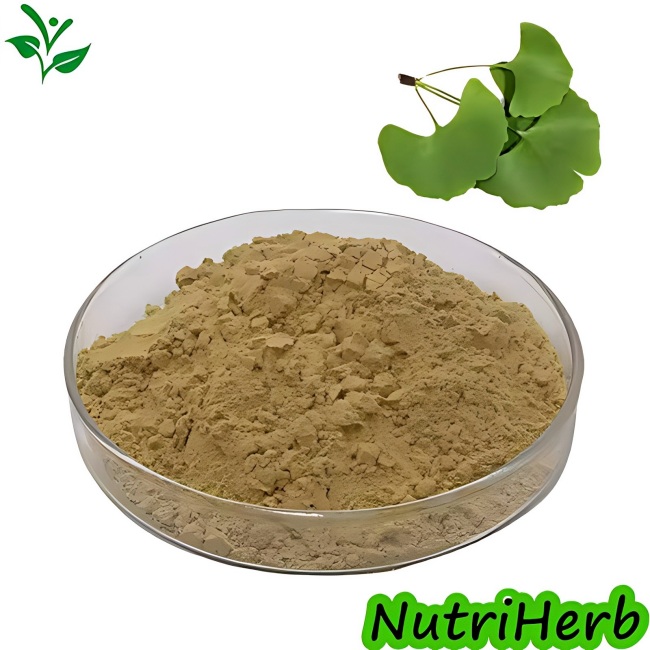
Ginkgo Biloba Extract is a botanical ingredient made from ginkgo leaf material processed into a standardized extract for nutraceutical and wellness formulations. For buyers, the important point is not only what the product is called, but how the ingredient is specified, tested, packed, and used in real products. The same product name can appear across many supplier websites, yet the practical details may differ from one source to another.
In professional sourcing, Ginkgo Biloba Extract should be reviewed through a full application lens. That means checking the product page, the specification sheet, the certificate of analysis, the test method, the carrier or excipient status if applicable, and the way the powder behaves during blending. A clean product description is helpful, but it is not enough by itself.
NutriHerb presents ginkgo biloba extract as part of a broader ingredient portfolio. Buyers comparing plant derived ingredients may also review luteolin extract powder or the broader plant extract ingredients category to understand how a supplier organizes related options. Internal product links are useful because they show whether a supplier is building a coherent category instead of listing isolated items.
The best way to understand Ginkgo Biloba Extract is to connect three questions. What is the material? What specification is being offered? How will it be used? When those questions are answered together, buyers can move from a general inquiry to a more useful technical review.
Product developers rarely select an ingredient for one reason only. They may need a recognizable ingredient story, a clear active marker, a suitable powder form, a stable supply path, and documents that can support quality review. Ginkgo Biloba Extract is usually evaluated within that broader decision process.
For a supplement brand, the ingredient must fit capsule, tablet, powder, or blend development. For a functional food project, sensory behavior and processing compatibility may matter more. For a distributor, the main concern may be whether the product can be explained clearly to several customer groups. Each buyer sees Ginkgo Biloba Extract through a different operating lens.
A strong ingredient choice helps reduce friction between teams. The purchasing team can discuss supply. The formulation team can test performance. The quality team can review documentation. The commercial team can position the finished product without overreaching. When the ingredient is poorly defined, every team spends more time asking basic questions.
That is why a structured review of Ginkgo Biloba Extract has real value. It helps buyers separate attractive product language from details that affect approval, use, and repeat orders.
Flavone Glycoside Standardization is one of the details buyers should not skip. For Ginkgo Biloba Extract, this factor affects how the ingredient is discussed, tested, and approved. A reliable supplier should be able to explain the practical meaning of this feature in a way that connects laboratory documents with real application performance.
In many ingredient projects, problems appear because teams treat a product name as if it were a complete specification. It is not. The product name starts the discussion, while the feature review defines whether the material is suitable. Buyers should ask how flavone glycoside standardization is controlled, how variation is handled, and whether the same standard can be maintained across repeat supply.
This is also where sample evaluation becomes useful. Samples should not be judged only by appearance. They should be tested in the intended formula, stored under realistic conditions, and reviewed by the people who will actually use the material. That approach turns flavone glycoside standardization from a catalog phrase into a measurable procurement point.### Terpene Lactone Review in Ginkgo Biloba Extract
Terpene Lactone Review is one of the details buyers should not skip. For Ginkgo Biloba Extract, this factor affects how the ingredient is discussed, tested, and approved. A reliable supplier should be able to explain the practical meaning of this feature in a way that connects laboratory documents with real application performance.
In many ingredient projects, problems appear because teams treat a product name as if it were a complete specification. It is not. The product name starts the discussion, while the feature review defines whether the material is suitable. Buyers should ask how terpene lactone review is controlled, how variation is handled, and whether the same standard can be maintained across repeat supply.
This is also where sample evaluation becomes useful. Samples should not be judged only by appearance. They should be tested in the intended formula, stored under realistic conditions, and reviewed by the people who will actually use the material. That approach turns terpene lactone review from a catalog phrase into a measurable procurement point.### Powder Flow Behavior in Ginkgo Biloba Extract
Powder Flow Behavior is one of the details buyers should not skip. For Ginkgo Biloba Extract, this factor affects how the ingredient is discussed, tested, and approved. A reliable supplier should be able to explain the practical meaning of this feature in a way that connects laboratory documents with real application performance.
In many ingredient projects, problems appear because teams treat a product name as if it were a complete specification. It is not. The product name starts the discussion, while the feature review defines whether the material is suitable. Buyers should ask how powder flow behavior is controlled, how variation is handled, and whether the same standard can be maintained across repeat supply.
This is also where sample evaluation becomes useful. Samples should not be judged only by appearance. They should be tested in the intended formula, stored under realistic conditions, and reviewed by the people who will actually use the material. That approach turns powder flow behavior from a catalog phrase into a measurable procurement point.### Clear Quality Documents in Ginkgo Biloba Extract
Clear Quality Documents is one of the details buyers should not skip. For Ginkgo Biloba Extract, this factor affects how the ingredient is discussed, tested, and approved. A reliable supplier should be able to explain the practical meaning of this feature in a way that connects laboratory documents with real application performance.
In many ingredient projects, problems appear because teams treat a product name as if it were a complete specification. It is not. The product name starts the discussion, while the feature review defines whether the material is suitable. Buyers should ask how clear quality documents is controlled, how variation is handled, and whether the same standard can be maintained across repeat supply.
This is also where sample evaluation becomes useful. Samples should not be judged only by appearance. They should be tested in the intended formula, stored under realistic conditions, and reviewed by the people who will actually use the material. That approach turns clear quality documents from a catalog phrase into a measurable procurement point.
In capsule products, Ginkgo Biloba Extract must be evaluated as part of a complete formula rather than as an isolated powder. The buyer should check how the ingredient behaves when blended with carriers, sweeteners, botanical partners, minerals, flavors, or other functional materials. A sample that looks acceptable in a small bag can still behave differently when it is moved into pilot production, so practical testing is important.
Application teams should also review the communication role of Ginkgo Biloba Extract. Some ingredients are chosen because the name is familiar to the market, while others are selected because they provide a specific specification story. Both situations require accurate wording. Claims should match local rules, and the supplier should provide documents that support the ingredient identity, grade, and intended use.
For capsule products, successful approval usually depends on several teams working together. The formulator checks compatibility, the quality team checks documents, the purchasing team reviews supply stability, and the marketing team reviews how the ingredient will be presented. When these teams use the same specification file, fewer misunderstandings occur.
In tablet blends, Ginkgo Biloba Extract must be evaluated as part of a complete formula rather than as an isolated powder. The buyer should check how the ingredient behaves when blended with carriers, sweeteners, botanical partners, minerals, flavors, or other functional materials. A sample that looks acceptable in a small bag can still behave differently when it is moved into pilot production, so practical testing is important.
Application teams should also review the communication role of Ginkgo Biloba Extract. Some ingredients are chosen because the name is familiar to the market, while others are selected because they provide a specific specification story. Both situations require accurate wording. Claims should match local rules, and the supplier should provide documents that support the ingredient identity, grade, and intended use.
For tablet blends, successful approval usually depends on several teams working together. The formulator checks compatibility, the quality team checks documents, the purchasing team reviews supply stability, and the marketing team reviews how the ingredient will be presented. When these teams use the same specification file, fewer misunderstandings occur.
In functional wellness combinations, Ginkgo Biloba Extract must be evaluated as part of a complete formula rather than as an isolated powder. The buyer should check how the ingredient behaves when blended with carriers, sweeteners, botanical partners, minerals, flavors, or other functional materials. A sample that looks acceptable in a small bag can still behave differently when it is moved into pilot production, so practical testing is important.
Application teams should also review the communication role of Ginkgo Biloba Extract. Some ingredients are chosen because the name is familiar to the market, while others are selected because they provide a specific specification story. Both situations require accurate wording. Claims should match local rules, and the supplier should provide documents that support the ingredient identity, grade, and intended use.
For functional wellness combinations, successful approval usually depends on several teams working together. The formulator checks compatibility, the quality team checks documents, the purchasing team reviews supply stability, and the marketing team reviews how the ingredient will be presented. When these teams use the same specification file, fewer misunderstandings occur.
Ginkgo Biloba Extract works best when it is considered early in the formulation process. The ingredient may affect powder flow, color, taste, label wording, customer education, and storage expectations. If it is added too late, the development team may discover compatibility issues after packaging, communication materials, or pilot tests have already been planned.
A careful review starts with the target format. Capsules and tablets need flow behavior and compressibility discussions. Powder sachets need dispersibility and sensory review. Functional foods need color, moisture, heat exposure, and flavor compatibility checks. Liquid concepts may require solubility or suspension testing, depending on the ingredient type.
The next step is to review the specification. Buyers should confirm whether the stated marker is measured by a recognized method and whether the supplier can provide a recent certificate of analysis. If the product is standardized, the standard should be clear. If the product is a whole food powder, moisture and microbiological limits may be more important than marker compounds.
Application planning should also consider consumer communication. A product may be technically suitable but difficult to explain. Buyers should avoid claims that go beyond the product documents or local regulations. Clear and accurate wording builds trust and reduces compliance risk.
A useful supplier comparison should not rely on brand names. Buyers should compare practical capabilities, document quality, application support, and repeat supply confidence. The table below uses anonymous competitors so the evaluation stays focused on decision factors.
Review Area | NutriHerb | Competitor A | Competitor B | Industry Average |
|---|---|---|---|---|
Product focus | Ginkgo Biloba Extract | Similar botanical or powder ingredient | General ingredient option | Application dependent |
Specification review | Active marker range | Basic active range | Limited detail | Varies by supplier |
Document support | Specification sheet, COA, and application discussion | Standard product file | Partial file set | Mixed practice |
Application guidance | capsule products, tablet blends | General supplement use | Broad wellness use | Depends on buyer testing |
Buyer fit | Brands, distributors, and formulators needing repeat supply | Small scale evaluation | Catalog driven sourcing | Project dependent |
This comparison helps buyers move beyond surface level product selection. It also makes internal review easier because quality, purchasing, and product teams can use the same criteria. The strongest option is usually the supplier that can explain the product clearly and support it consistently, not simply the supplier with the longest catalog.
Technical review is where a product moves from interest to possible approval. For Ginkgo Biloba Extract, the goal is to confirm whether the material fits the intended use and whether the supplier can support ongoing quality expectations.
Technical Point | What Buyers Should Review | Why It Matters |
|---|---|---|
Flavone Glycoside Standardization | Confirm how flavone glycoside standardization is measured and documented | Helps connect Ginkgo Biloba Extract with a dependable specification |
Terpene Lactone Review | Review powder appearance, odor, flow, and handling notes | Supports smoother formulation testing |
Powder Flow Behavior | Check origin, processing, and traceability information | Builds confidence for ingredient approval |
Heavy Metals And Microbes | Ask how heavy metals and microbes is verified for the target application | Reduces surprises during pilot testing |
Identity Testing | Review limits and methods before approving a supplier | Supports safer document control |
Storage Guidance | Confirm packaging, storage, and retest expectations | Protects long term product consistency |
A technical table is useful because it forces the buyer to define what matters before samples arrive. Without this step, teams may approve a sample based on a quick impression and later discover that the specification does not match production needs.
Choosing Ginkgo Biloba Extract begins with the end product. A buyer should define the finished format, target users, application claims, preferred dosage or serving approach, sensory limits, and document requirements. This prevents the common mistake of treating every supplier listing as interchangeable.
The second step is to review sample performance. Samples should be tested in the intended matrix, not only inspected in a package. A botanical powder may look fine at first but change blend color. A food powder may have excellent origin appeal but need moisture control. A functional ingredient may require careful communication because the customer will ask what it does and why it was selected.
The third step is supplier evaluation. Buyers should examine responsiveness, document structure, lead time communication, and willingness to answer technical questions. In many projects, the best supplier is the one that makes review easier. Clear documents and consistent answers reduce unnecessary delays.
The final step is repeat order planning. A first sample does not prove long term supply performance. Buyers should discuss how specifications are maintained, how changes are communicated, and what quality records are available. This turns a one time inquiry into a more stable sourcing relationship.
Quality control for Ginkgo Biloba Extract should include identity, specification, appearance, moisture, microbiological status, contaminants, and packaging review when applicable. The exact checklist depends on the product type, but the principle is the same. Buyers need evidence that the material can be supplied in a controlled and repeatable way.
Documentation should be easy for multiple teams to understand. A quality manager may look for test methods and batch records. A formulator may look for handling guidance. A purchasing manager may look for stable product identification. A product manager may look for application notes. Strong documentation supports all of these roles.
Buyers should also review change control. Ingredient supply can be affected by harvest variation, processing adjustments, packaging updates, and regulatory expectations. A supplier that communicates changes clearly is easier to work with than one that leaves buyers guessing.
For international buyers, document clarity is especially important. The product may move through importers, distributors, formulators, and finished product brands. Each step adds a chance for misunderstanding. Clear documentation keeps the product story consistent from supplier to final application.
Packaging is often treated as a secondary detail, but it can affect product quality and customer experience. Ginkgo Biloba Extract should be packed in a way that protects the powder from moisture, contamination, and unnecessary exposure. Buyers should confirm bag type, outer carton strength, labeling method, and storage recommendations.
Storage conditions should be realistic. A product may be stable under standard warehouse conditions, but buyers still need to consider humidity, temperature variation, and handling practices. The supplier should provide guidance that is clear enough for warehouse teams and downstream customers.
Handling also matters. Some powders are fine and light, while others are denser or more granular. Flow behavior can influence weighing, blending, filling, and cleaning. These issues are not always visible on a product page, so sample testing remains important.
When packaging, storage, and handling are reviewed early, buyers can avoid many routine problems. The product becomes easier to receive, test, approve, store, and reorder.
The market for Ginkgo Biloba Extract is shaped by buyers who want clearer ingredient stories and better product control. Brands are looking for ingredients that can be explained simply while still meeting technical standards. This has increased demand for suppliers that combine product breadth with document discipline.
Another trend is application driven sourcing. Buyers are no longer asking only what an ingredient is. They want to know how it fits capsules, powders, beverages, foods, or specialty formulations. Suppliers that provide application context help buyers make faster and more confident decisions.
Transparency is also becoming more important. Buyers want to understand botanical origin, manufacturing process, testing approach, and packaging control. They may not need excessive detail at the first inquiry, but they do expect organized answers when a product moves toward approval.
Finally, buyers are building product families rather than isolated SKUs. A brand may source Ginkgo Biloba Extract along with related botanical or functional ingredients. This makes supplier category strength valuable because it helps buyers expand products without starting the sourcing process from zero each time.
Before approving Ginkgo Biloba Extract, buyers should create a practical checklist. The checklist should include product name, specification, target application, sample quantity, document requests, packaging needs, and internal review owner. A simple checklist can prevent confusion during communication.
The review should also include application testing. For supplements, test how the powder behaves during blending and filling. For food or beverage projects, test sensory performance and processing compatibility. For distribution, confirm whether the product can be explained clearly to downstream customers.
Buyers should ask for documents early. A certificate of analysis, specification sheet, allergen statement, microbiological data, and storage guidance may be needed depending on the market. Waiting until the final stage to request documents can delay the project.
The checklist should end with a decision record. Buyers should document why the ingredient was approved, which specification was accepted, and which communication limits apply. This makes future reorders easier and protects the product team from repeating the same review.
A: Ginkgo Biloba Extract is used in capsule products, tablet blends, and related product development projects where a clear specification and reliable documentation are important.
A: Buyers should review the product specification, request documents, test samples in the intended application, and confirm whether Ginkgo Biloba Extract matches the finished product plan.
A: A specification sheet, certificate of analysis, identity information, microbiological data, and storage guidance are useful when evaluating Ginkgo Biloba Extract.
A: Ginkgo Biloba Extract can be evaluated for powder blends, but buyers should test flow, taste, color, compatibility, and stability before routine use.
A: Clear supplier communication helps buyers understand the specification, avoid misunderstanding, and manage repeat sourcing of Ginkgo Biloba Extract more confidently.
A: Ginkgo Biloba Extract should be compared by application fit, active specification, powder behavior, documentation, and long term supply consistency.
Ginkgo Biloba Extract is easier to source when buyers connect the product name with real application needs, technical documents, sample testing, and supplier capability. NutriHerb offers relevant ingredient options that help formulators and sourcing teams review botanical and functional ingredients with more confidence. A careful process supports better product development, smoother approval, and more reliable long term sourcing.


