
PIONEER IN
PLANT EXTRACT
Views: 0 Author: Site Editor Publish Time: 2026-06-06 Origin: Site


The supplement industry relies heavily on functional ingredients to deliver measurable health benefits. One standout staple is spirulina powder. It has officially moved past its trendy buzzword status. Today, manufacturers and formulators scrutinize it closely for genuine bioactivity and safety.
However, buyers face vast quality disparities in the current market. While this blue-green algae powder boasts high theoretical nutritional yields, real-world efficacy remains unpredictable. It depends heavily on cultivation environments. It also relies on processing methods and rigorous contamination testing. Poor sourcing can quickly ruin a formulation.
We aim to provide you with an evidence-based framework. You will learn how to confidently evaluate spirulina quality. We will focus on bioavailable protein, active compound stability, and non-negotiable safety standards.
Spirulina delivers a 55–70% protein yield by dry weight, but its true value lies in its 85–95% amino acid digestibility due to the lack of a tough cellulose wall.
Beware of the B12 myth: The vitamin B12 found in spirulina is primarily "pseudovitamin B12," which is not biologically active in humans.
Phycocyanin (the primary active compound) degrades at temperatures above 70°C, making low-heat processing or microencapsulation critical for formulation.
Sourcing is paramount; natural spirulina acts as a bio-accumulator, making mandatory third-party testing for heavy metals and microcystins the ultimate deciding factor in procurement.
Before evaluating complex active compounds, you must understand the foundational macronutrients. Spirulina offers a highly concentrated nutritional profile. However, raw numbers do not always tell the full story. Digestibility and bioavailability determine the true value of any functional food.
You can objectively measure the quality of algae by its dry-weight composition. Below is a standard nutritional breakdown chart for premium commercial grades.
Macronutrient | Dry-Weight Percentage | Primary Function in Supplements |
|---|---|---|
Protein | 55% – 70% | Provides essential amino acids and structural support. |
Carbohydrates | 15% – 25% | Delivers complex polysaccharides for sustained energy. |
Lipids (Fats) | 6% – 9% | Supplies essential fatty acids like GLA for lipid metabolism. |
Minerals & Moisture | 3% – 7% | Provides trace minerals (iron, magnesium) and ash content. |
Many plant-based proteins require heavy chemical or mechanical extraction. They often suffer from poor gastrointestinal absorption. Spirulina protein is highly efficient because it bypasses these hurdles. It completely lacks a hard, cellulosic cell wall. Instead, the organism features a very thin peptidoglycan layer. Human digestive enzymes break this layer down rapidly. This unique biological structure results in an exceptional 85% to 95% amino acid digestibility rate. You get more usable nutrition per gram compared to standard plant sources.
Spirulina contains all essential amino acids. It offers a well-rounded profile for cellular repair. Formulators must set realistic expectations, though. It serves best as a complementary nutritional supplement. You should not market it as a standalone bulk protein replacement. A standard daily dose ranges from three to ten grams. This yields about two to six grams of actual protein. Consumers should pair it with other bulk proteins like whey or pea to meet daily caloric needs.
We must objectively debunk a persistent industry myth. Many generic brands claim spirulina is a reliable vitamin B12 source for vegans. This is biologically incorrect. The majority of B12 found in this algae is "pseudovitamin B12" (cobamides). Human metabolic pathways cannot bind to or utilize this pseudo-vitamin. In fact, pseudovitamin B12 can compete with true B12 for absorption receptors. It may worsen a deficiency if relied upon exclusively. Brands build immense credibility when they transparently educate consumers about this limitation rather than hiding it.
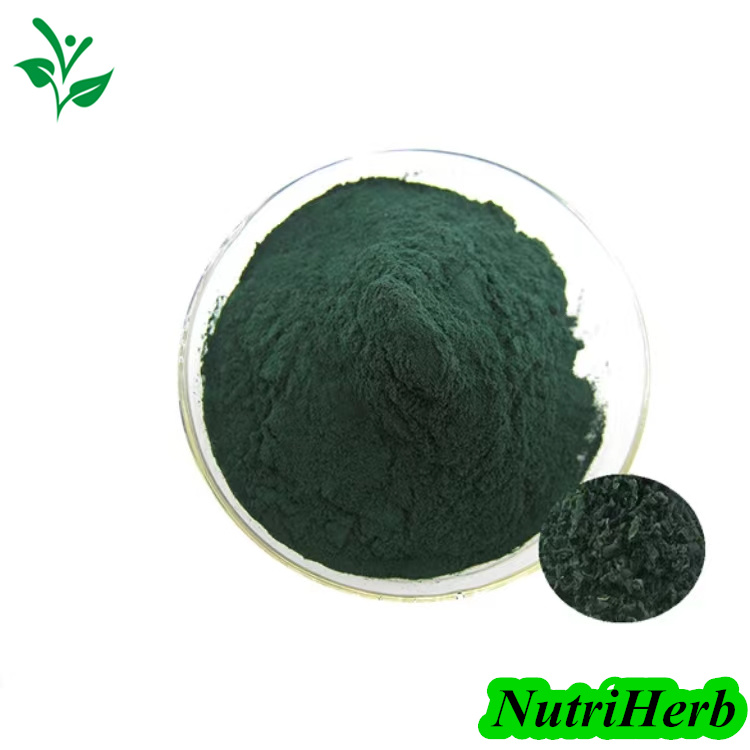
Beyond basic macros, the functional supplement market demands specific active compounds. The distinct blue-green color of this algae hints at its most powerful biological assets. These compounds dictate antioxidant capacity and influence systemic health.
Phycocyanin serves as the ultimate quality marker. It is a pigment-protein complex responsible for the vibrant blue hue. More importantly, it drives the primary antioxidant properties. Phycocyanin contains a chromophore called phycocyanobilin. This molecule strongly inhibits NADPH oxidase in the human body. By blocking this enzyme, it drastically reduces systemic oxidative stress. It neutralizes free radicals before they damage cellular tissues. High-grade batches always feature a deep, rich color indicating high phycocyanin retention.
Formulators often choose between raw powders and refined extracts based on product goals. Whole-cell powder provides a broad spectrum of fiber, lipids, and trace minerals. However, premium formulations often utilize a standardized spirulina extract. This extraction process isolates the phycocyanin to guarantee a specific potency.
Feature | Whole Spirulina Powder | Standardized Spirulina Extract |
|---|---|---|
Composition | Full dehydrated algae cell | Isolated phycocyanin pigment |
Phycocyanin Level | Variable (typically 10-15%) | Standardized (often 25-30%+) |
Best Application | Smoothies, green blends, general health | Targeted therapeutics, natural food coloring |
Water Solubility | Partial (leaves fibrous residue) | 100% water soluble |
Lipids make up a small portion of the algae, but they are highly bioactive. It provides a rare natural source of Gamma-linolenic acid (GLA). It also contains trace amounts of Omega-3s, specifically EPA and DHA. Clinical models demonstrate that GLA plays a vital role in supporting healthy lipid metabolism. It helps regulate the inflammatory response. These fatty acids contribute significantly to cardiovascular health. They work synergistically with the protein and antioxidants to protect blood vessels.
Creating a theoretical formula is easy. Executing it on the manufacturing floor is difficult. Formulators face distinct challenges when working with marine-based ingredients. You must account for temperature thresholds, flavor profiles, and color stability.
Implementation risks are high during the manufacturing process. Phycocyanin is notoriously heat-labile. It suffers irreversible structural damage at processing temperatures above 70°C to 75°C. When this pigment degrades, the powder loses its antioxidant power. It also shifts from a vibrant blue-green to a dull, unappealing olive-brown. You must audit your spray-drying or pasteurization steps closely. Short-time, low-heat processing is mandatory to preserve the active compounds.
Consumer compliance often drops due to sensory issues. The deep pigmentation can easily stain manufacturing equipment. It also turns mixed beverages an intimidating dark green. Furthermore, it carries an inherent "fishy" or marine odor. This volatile flavor profile can easily overpower delicate flavor systems. If you design unflavored powders or delicate functional foods, this marine taste becomes a major hurdle.
Modern food science offers several workarounds to mitigate these manufacturing hurdles. You can implement specific techniques to stabilize the product.
Microencapsulation: Coating the powder in a protective lipid or starch matrix masks the marine odor. It also shields the phycocyanin from heat and oxidation during shelf life.
Cold-Extrusion: Using cold-pressed manufacturing for bars or gummies prevents thermal degradation entirely.
Salt Stabilization: Formulators can utilize small amounts of sodium chloride (NaCl) during mixing. Trace salt helps stabilize the protein structures against heat shock.
Flavor Masking: Employing strong citrus or berry acids (like citric or malic acid) effectively neutralizes the alkaline, grassy notes.
Safety must dictate your procurement strategy. Sourcing cheap raw materials introduces severe health risks to the end consumer. You must treat supplier vetting as a rigorous scientific process.
You must understand that natural spirulina acts as a biological sponge. It readily absorbs elements from its surrounding water source. This trait is great for absorbing beneficial minerals. However, if cultivated improperly, it eagerly absorbs heavy metals. It acts as a bio-accumulator for lead, arsenic, cadmium, and mercury. Plants grown in polluted groundwater or near industrial zones will fail safety tests. Consuming heavy metal-laden supplements leads to chronic toxicity over time.
Open-pond systems present another severe risk: cross-contamination. Toxic strains of cyanobacteria can easily invade poorly monitored ponds. These unwanted invaders produce microcystins. Microcystins are potent hepatotoxins. Even trace amounts can lead to acute liver toxicity and gastrointestinal distress. Visual inspection cannot detect microcystins. Therefore, advanced laboratory screening is absolutely necessary to ensure batch purity.
You must establish strict minimum safety thresholds. Any sourced material must align with FDA GRAS (Generally Recognized As Safe) status. You should never rely solely on a supplier's internal guarantee. Sourced ingredients must undergo strict third-party batch testing. Reputable labs use methods like High-Performance Liquid Chromatography (HPLC) to detect toxins. They use Inductively Coupled Plasma Mass Spectrometry (ICP-MS) for heavy metal quantification. These tests separate premium ingredients from dangerous substitutes.
Selecting the right manufacturing partner protects your brand reputation. You need a systematic approach to vet global suppliers. Use this decision matrix to shortlist the best candidates.
Evaluate Traceability and Cultivation: Prioritize suppliers who utilize controlled closed-loop photobioreactors. If they use open ponds, strictly verify their water source. The best suppliers use pure, mineral-rich water from specific desert locations or pristine, deep groundwater aquifers far from agriculture runoff.
Demand Strict COA Requirements: Advise your purchasing team to demand recent, batch-specific Certificates of Analysis (COAs). A valid COA must verify that heavy metal limits fall strictly below regulatory thresholds. It must confirm the total absence of microcystins and harmful pathogens like Salmonella. Finally, it must display verified protein percentages and exact phycocyanin levels.
Assess Sustainability Metrics (ESG): Examine their environmental impact. Top-tier commercial suppliers now implement zero-water-discharge processes. They recycle their cultivation water continuously. They also utilize solar or renewable energy to power their facilities. This aligns with corporate ESG goals and strongly appeals to eco-conscious end consumers.
Review Audit History: Request their third-party facility audit certificates. Look for ISO, GMP, and organic certifications to ensure consistent operational hygiene.
Spirulina remains one of the most nutrient-dense ingredients available to the supplement industry. It delivers highly bioavailable protein, rare fatty acids, and potent antioxidant compounds. However, these benefits only materialize if the algae survives the manufacturing process intact. It must be cultivated in a pristine environment and processed with gentle, low-heat methods.
We urge formulators, brand owners, and consumers to look past generic marketing claims. Base your purchasing decisions on rigorous COAs. Demand heat-stable processing techniques. Insist on verified phycocyanin content. Quality transparency is the only way to guarantee safety and efficacy.
We invite you to review our transparent sourcing documentation today. You can request a testing sample to verify our purity firsthand. Consult directly with our specialized formulation team to seamlessly integrate this powerful algae into your next custom product.
A: Evidence-based ranges typically suggest 3 to 10 grams daily for general wellness. It provides a solid baseline of antioxidants and trace minerals at this level. You should scale high doses gradually to allow the digestive system time to adjust to the high nutrient density.
A: No. It contains primarily pseudovitamin B12. Humans cannot absorb or utilize this analog biologically. Vegans must continue to rely on fortified foods or dedicated, bioavailable B12 supplements to meet their neurological and metabolic needs.
A: The powder is the whole, dehydrated algae cell containing fiber, lipids, and varied proteins. Extracts isolate specific active compounds, most notably the blue pigment phycocyanin. Extracts deliver targeted functional benefits, water solubility, and standardized antioxidant potency for premium formulations.
A: Visual inspection, smell, or taste testing is entirely insufficient. Verified third-party laboratory testing is the only reliable method. Independent labs must screen the batch for heavy metals (lead, arsenic) and microcystins to guarantee consumer safety.


