
PIONEER IN
PLANT EXTRACT
Views: 0 Author: Site Editor Publish Time: 2026-06-02 Origin: Site


Finding a stable, vibrant "true red" or "deep purple" plant-based dye is notoriously difficult. Formulators constantly battle off-flavors, thermal degradation, and consumer pushback when sourcing natural pigments. You need a reliable solution, but natural ingredients often behave unpredictably in complex matrices.
The FDA is actively phasing out synthetic dyes like Red #3 due to health concerns. Meanwhile, consumer scrutiny on Red 40 is at an all-time high. Brands must transition to clean-label alternatives to stay compliant and retain market share. Retailers are also updating their acceptable ingredient lists, pushing manufacturers to adapt quickly.
You will discover how red cabbage extract powder (E163) provides a highly stable, versatile, and vegan-compliant coloring solution. We will explore its pH-dependent mechanisms, formulation constraints, and practical application strategies. Understanding these parameters ensures your product maintains visual appeal from production to the consumer's pantry.
Mechanism: Red cabbage color is driven by anthocyanins, operating as a pH-sensitive "chameleon" dye—yielding vibrant reds in acidic environments and purples/blues in neutral bases.
Formulation Advantage: Outperforms beet juice in heat stability and completely bypasses the vegan/allergen limitations of carmine (cochineal extract).
Application Sweet Spots: Ideal for high-acid beverages, gummies, fruit preps, and smart-packaging applications.
Processing Requirements: Requires targeted pH buffering and, in some cases, microencapsulation or copigmentation to defend against light and oxidation.
Regulatory shifts are fundamentally changing how food scientists approach product development. FDA bans on legacy synthetics like Red Dye #3 force immediate reformulation. Furthermore, shifting consumer demand continuously drives the removal of Red 40, Blue 1, and Blue 2. Shoppers actively read labels, and they avoid products containing artificial dyes. This market pressure leaves manufacturers searching for a natural food colorant capable of matching synthetic performance.
However, the "Natural Red" dilemma presents significant hurdles. Common natural replacements harbor inherent flaws causing headaches during commercial scale-up:
Beetroot: Suffers from severe thermal degradation. It turns an unappealing brown during high-heat processing, extrusion, or baking.
Radish and Tomato: Often carry a distinct, undesirable flavor taint. Delicate bases like clear beverages or dairy easily pick up these vegetable notes.
Paprika Oleoresin: Oil-soluble by nature. It yields a distinctly orange hue rather than a true red, limiting its use in water-based applications.
Carmine: Offers excellent stability. Unfortunately, it originates from crushed cochineal insects. This alienates the growing vegan and kosher/halal consumer bases, severely limiting market reach.
To successfully transition away from synthetics, a viable natural alternative must meet specific decision criteria. Formulators must evaluate replacements systematically to ensure product viability.
Environmental Resilience: The pigment must balance heat and light stability throughout the expected shelf life.
Sensory Neutrality: It must maintain a neutral flavor profile, avoiding earthy or sulfurous off-notes.
Regulatory Alignment: The ingredient requires strict label compliance across global markets.
Matrix Compatibility: Formulators need reliable solubility in either aqueous or lipid systems without causing precipitation.
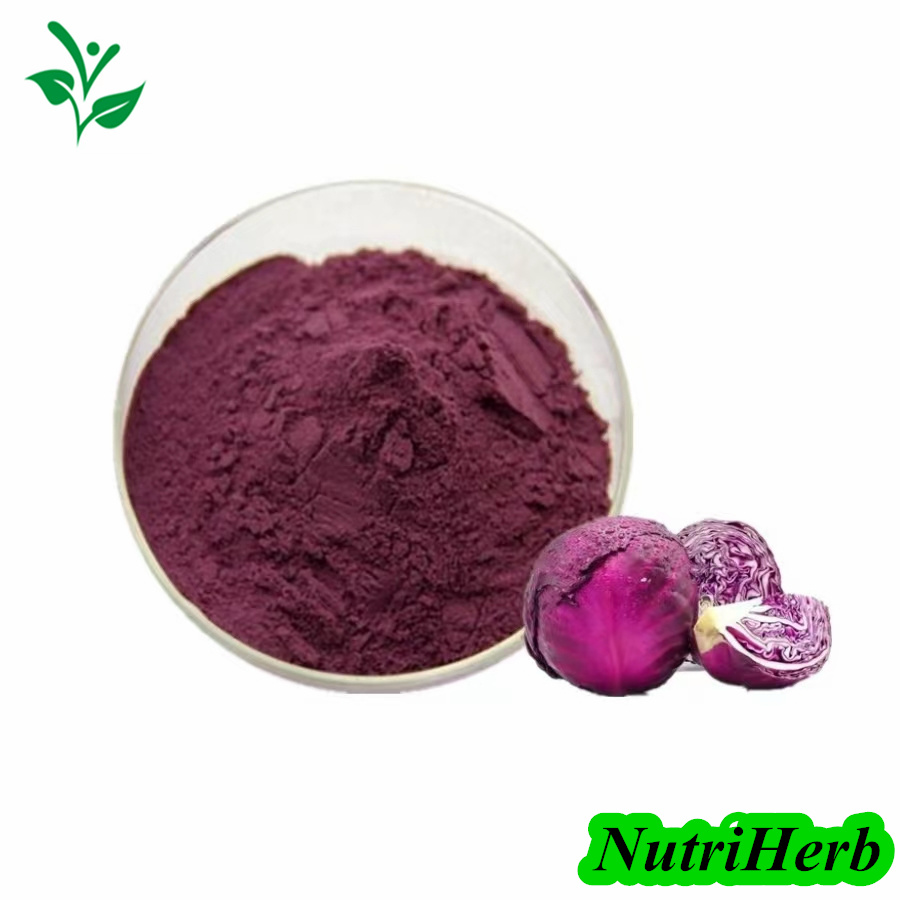
Understanding the chemical profile is crucial for successful application. The science of this pigment revolves around the flavylium cation. Red cabbage serves as a potent anthocyanin extract, meaning it changes structural form based entirely on the surrounding pH environment. This dynamic nature makes it an incredibly versatile tool for R&D teams.
The visual expression shifts dramatically as the matrix acidity changes. At pH 2.0 to 4.0, the flavylium cation dominates, yielding bright pinks to vibrant reds. This makes it perfect for acidic profiles. However, as the environment transitions to pH 5.0 to 7.0, the molecular structure morphs into a quinoidal base. The visual result shifts seamlessly to deep purples and bluish tones.
Beyond its striking visual capabilities, this pigment delivers substantial label and functional benefits. Regulatory bodies widely recognize it as GRAS (Generally Recognized as Safe). It remains exempt from complex FDA certification processes, simplifying your compliance paperwork. You can label it cleanly on consumer packaging. Standard declarations include "Fruit and Vegetable Juice (for color)" or simply "Red Cabbage Extract," which resonates perfectly with modern shoppers.
Additionally, it carries a powerful "health halo." The base material contains high polyphenol and antioxidant content. While primarily used for visual appeal, consumers naturally associate these botanical extracts with nutritional benefits, giving your product an edge in competitive retail spaces.
Mastering the pH dependency unlocks the full potential of this ingredient. Acidic optimization represents the clearest path to success. You will find it best deployed in acidic applications where the red hue remains structurally locked. Ideal categories include citrus beverages, gummy candies, yogurts, and fruit fillings. The low pH environment stabilizes the flavylium cation, ensuring the color remains vivid.
To prevent color drift during shelf life, buffer systems are mandatory. You must pair the powder with pH stabilizers like citric acid or ascorbic acid. Small fluctuations in a beverage's acidity can shift a bright red into a muddy purple. Buffers lock the desired pH in place, guaranteeing visual consistency from the manufacturing plant to the consumer's glass.
Defending against thermal and light degradation requires strategic processing sequencing. We recommend adding the extract in the late stages of processing. Introduce the pigment post-pasteurization where possible. Minimizing the heat load preserves the delicate molecular structure. Prolonged exposure to boiling temperatures will eventually degrade the pigment intensity.
For challenging matrices like dry beverage mixes or baked goods, advanced delivery systems become necessary. Raw powders face rapid oxidation in these environments. You should evaluate custom-blended formats utilizing microencapsulation. Copigmentation techniques also protect the anthocyanins from oxidation and UV light. These technologies wrap the pigment in a protective matrix, releasing it only upon hydration or consumption.
Strict pilot batch validation remains non-negotiable. Base ingredients significantly alter the final expression. Water hardness and existing mineral content interact directly with the pigment. Emphasize small-batch testing to monitor these interactions before committing to commercial production runs.
pH Level | Color Expression | Optimal Applications | Stability Notes |
|---|---|---|---|
2.0 - 4.0 | Bright Pink to Vibrant Red | Citrus beverages, gummies, fruit preps | Highly stable; lock with citric acid buffers. |
5.0 - 6.0 | Deep Purple | Yogurts, neutral dairy bases, confections | Requires protection from prolonged heat. |
6.5 - 7.5 | Blue to Blue-Green | Novelty snacks, specialized frostings | Highly sensitive; use microencapsulated formats. |
Selecting the right pigment requires comparing it against other natural options on the market. When looking at red cabbage color versus beet root powder, thermal tolerance stands out. Red cabbage maintains its structural integrity under moderate thermal processing. Beet root, conversely, consistently browns when exposed to similar heat profiles. If you are developing pasteurized juices or high-temperature confectionery, cabbage remains the definitive choice.
When formulating for blues and purples, the comparison shifts to Spirulina. Spirulina provides a true, brilliant blue. However, it degrades rapidly under heat and within acidic environments. Spirulina essentially denatures when pasteurized. Cabbage serves as a superior, heat-tolerant purple or blue base in neutral pH applications where Spirulina inevitably fails. It provides a reliable alternative when processing temperatures run high.
The comparison against Carmine highlights significant consumer and regulatory advantages. Carmine provides incredible color stability, but consumers increasingly reject insect-derived ingredients. Cabbage provides a direct, 1:1 cruelty-free alternative in acidic confections. You achieve the desired vibrant red without triggering the associated regulatory hurdles or consumer backlash, ensuring your product remains fully vegan-compliant.
Procuring a high-quality plant-based food color involves more than just finding the lowest price. Standardization and concentration metrics separate premium suppliers from commodity brokers. Guide your purchasing buyers to evaluate suppliers based on standardized Color Value (CU) rather than just gross weight. A higher CU means you use less powder to achieve the target shade. This standardization ensures batch-to-batch visual consistency across years of production.
Solubility specs demand careful attention, especially for beverage formulators. Specify the absolute need for high-grade, fully water-soluble powders. Lower-tier extracts frequently clump or leave unsightly sediment at the bottom of bottles. This represents a common failure point that damages brand perception. Demand a product that hydrates instantly and remains suspended evenly.
Procurement teams should prioritize suppliers offering custom blending capabilities. Seek partners capable of providing pre-buffered custom blends tailored exactly to your specific product matrices. Buying a raw commodity powder often leaves your R&D team struggling to balance pH levels internally. A pre-stabilized blend saves developmental time and reduces the risk of color shifting on retail shelves.
Finally, respect the realities of shelf-life and storage. These botanical extracts remain sensitive to environmental factors before incorporation into food matrices. Powders must be shipped and stored in specialized packaging. UV-protective, moisture-barrier bags prevent premature oxidation and clumping in your warehouse. Proper storage protocols dictate keeping the powder cool and tightly sealed until the exact moment of batching.
Red cabbage extract powder stands out as a highly functional, reliable plant-based food color. It delivers brilliant reds and deep purples, provided the formulation matrix respects its inherent pH and thermal boundaries. By moving away from synthetic dyes, brands align with consumer expectations for transparency and clean labels while maintaining striking visual appeal.
To move forward effectively, we recommend R&D teams initiate pilot formulations in high-acid applications first. Start with citrus beverages or fruit-based gummies to leverage the pigment's natural stability zone. Next, source custom-blended, pH-stabilized samples from verified clean-label suppliers. Conduct accelerated shelf-life testing to observe how your specific base ingredients interact with the colorant, ensuring a flawless commercial launch.
A: High-quality, commercially extracted powders undergo filtration processes that strip out the sulfurous compounds, rendering them essentially flavorless at typical usage rates (0.01% - 0.5%).
A: The extract maintains a vivid red/pink up to approximately pH 4.0. As the matrix crosses pH 5.0 and approaches neutral (pH 7.0), it distinctly shifts to purple and eventually blue.
A: Anthocyanins are moderately heat-sensitive. While more stable than beet juice, prolonged exposure to baking temperatures (especially in alkaline batters like those with baking soda) will cause color shifting. Microencapsulated variants are recommended for baked goods.
A: Natural food colorants are inherently more expensive per pound than synthetics. However, the ROI is realized through clean-label premium pricing and future-proofing against impending synthetic dye regulations.


