
PIONEER IN
PLANT EXTRACT
Views: 0 Author: Site Editor Publish Time: 2026-06-04 Origin: Site


Formulators and procurement teams face mounting pressure in today's market. Consumers heavily demand clean-label products. They expect food and supplement brands to replace synthetic additives with natural alternatives. You must achieve this shift without sacrificing color vibrancy or nutritional yield. However, transitioning away from synthetic ingredients is rarely straightforward. Sourcing beta carotene powder derived from botanical sources presents distinct physical and chemical hurdles. You face stability, solubility, and shelf-life challenges that simply do not exist with synthetic equivalents.
This guide provides a robust technical framework for formulation and procurement professionals. We will help you evaluate exact botanical specifications and understand crucial stability limits. You will learn how to integrate these extracts successfully. Whether you need a functional nutritional source or a vibrant dye, mastering these variables is essential. By following this framework, you can confidently phase out synthetic dyes while maintaining long-term product integrity.
Natural beta carotene requires specific carrier matrices (e.g., maltodextrin, starch) to protect against rapid oxidation and UV degradation.
Evaluating vendor Certificates of Analysis (COAs) must prioritize HPLC testing methods to confirm accurate provitamin A assay levels over cheaper UV-Vis spectrophotometry.
Formulating with natural carrot extract often necessitates careful pH balancing and the addition of secondary antioxidants (like tocopherols) to ensure shelf-life stability in aqueous applications.
Shifting from synthetic to natural extract requires recalculating dosage rates due to variations in pigment concentration and solubility behaviors.
Consumer demand for clean-label products drives the aggressive phase-out of synthetic colorants. Modern shoppers actively read ingredient panels. They want to see familiar, plant-based sources rather than chemical compounds. This shift introduces a complex business problem. Transitioning to a botanical source directly impacts your unit economics. You also face new hurdles regarding supply chain predictability. Nature does not produce identical batches every harvest.
Compositional differences sit at the heart of this transition. You must understand the isomer profiles of your ingredients. Synthetic versions consist predominantly of the trans isomer. This structure provides extreme stability and an intense, predictable color. In contrast, natural extracts contain a varied mix of cis and trans isomers. This mix offers distinct bioavailability advantages for human absorption. However, the varied isomer profile also makes the natural version less uniform in color intensity.
Regulatory compliance adds another layer of complexity to your formulation strategy. Many brands switch to botanicals to claim USDA Organic or Non-GMO Project Verified status. If you formulate a natural color powder, you must ensure your supplier meets strict agricultural auditing standards. The carrier ingredients must also comply with these certifications. A non-GMO active ingredient blended with a GMO-corn maltodextrin carrier will fail compliance checks.
You must acknowledge the trade-off reality of this transition. Natural extracts are significantly more susceptible to environmental stressors than their synthetic counterparts. Heat, light, and oxygen will degrade plant-sourced pigments rapidly. Therefore, you must commit to more rigorous R&D validation. You need comprehensive shelf-life testing before any commercial rollout. Relying on synthetic performance metrics will lead to color fading and product failure in the field.
Evaluating raw material specifications is your first line of defense against formulation failure. Premium carrot extract varies wildly in quality and concentration across different suppliers. You must tightly control assay levels, physical behavior, and safety parameters.
Assay and concentration levels dictate your dosing strategy. Standard commercial grades typically range from 1% to 20% purity. You might use a 1% formulation for a light beverage application. Conversely, you would require a 20% concentration for a high-potency softgel. You must match the concentration to your final product's volume and moisture constraints. Overloading a low-concentration powder into a small tablet creates impossible manufacturing parameters.
Physical parameters directly impact your manufacturing efficiency. Particle size, often measured in mesh specifications, dictates dispersion rates in liquids. Finer particles (e.g., 100 mesh) dissolve faster and prevent clumping. Bulk density and flowability are equally critical. If the powder is too fluffy, it bridges in hoppers. If it is too dense, it complicates accurate volumetric dosing. Poor flowability stops high-speed tableting presses.
Microbiological and contaminant limits are non-negotiable for botanical extracts. Root vegetables absorb elements heavily from the soil. Therefore, heavy metal testing is vital. You must verify maximum allowable limits for Lead, Arsenic, Cadmium, and Mercury. Additionally, pesticide residue testing standards are critical. Organic fields can still suffer from pesticide drift. Premium suppliers run extensive multi-residue pesticide screens to guarantee safety.
Below is a standard specification table to guide your vendor evaluations:
Parameter | Standard Range / Limit | Impact on Formulation |
|---|---|---|
Assay Content | 1% to 20% | Determines dosage rate and physical space in the formula. |
Particle Size | 90% through 80-100 mesh | Affects solubility and liquid dispersion rates. |
Moisture Content | < 5% | Prevents microbial growth and extends shelf life. |
Heavy Metals (Total) | < 10 ppm | Ensures regulatory compliance and consumer safety. |
Formulating with botanical pigments requires a deep understanding of physical chemistry. You cannot simply drop the powder into a mixing tank and expect perfect results. Overcoming solubility hurdles is often your biggest technical challenge.
You must address the inherent lipophilic nature of the pigment. It is naturally fat-soluble. It repels water. If you are developing a beverage, this presents a severe problem. You must evaluate water-dispersible formulations carefully. These usually utilize microencapsulation or nano-emulsion technologies. The active pigment is wrapped in a hydrophilic carrier. This allows it to suspend evenly in an aqueous solution without separating.
Mitigating environmental degradation requires strict protective measures. The chemical structure features long chains of conjugated double bonds. These bonds provide the brilliant orange color, but they are highly reactive. Light and UV exposure rapidly break these bonds. Opaque packaging or UV-blocking containers are non-negotiable for finished goods. Clear glass bottles will lead to severe color fading within weeks on a retail shelf.
Thermal stress also dictates your processing parameters. You must understand behavior during pasteurization, UHT (Ultra-High Temperature), or baking processes. Extended heat exposure causes color degradation. Brief, high-heat processes like UHT are generally safer than prolonged baking. You must map your exact temperature thresholds before approving a formula.
Matrix interactions and pH significantly influence long-term stability. Optimal pH ranges generally fall between 3.0 and 7.0 for maintaining a yellow to deep orange hue. Highly acidic environments can cause precipitation. We strongly recommend leveraging synergistic effects. Co-formulating with ascorbic acid (Vitamin C) or mixed tocopherols (Vitamin E) is highly effective. These secondary antioxidants sacrifice themselves to oxygen. They protect the pigment from oxidation and dramatically extend shelf life.
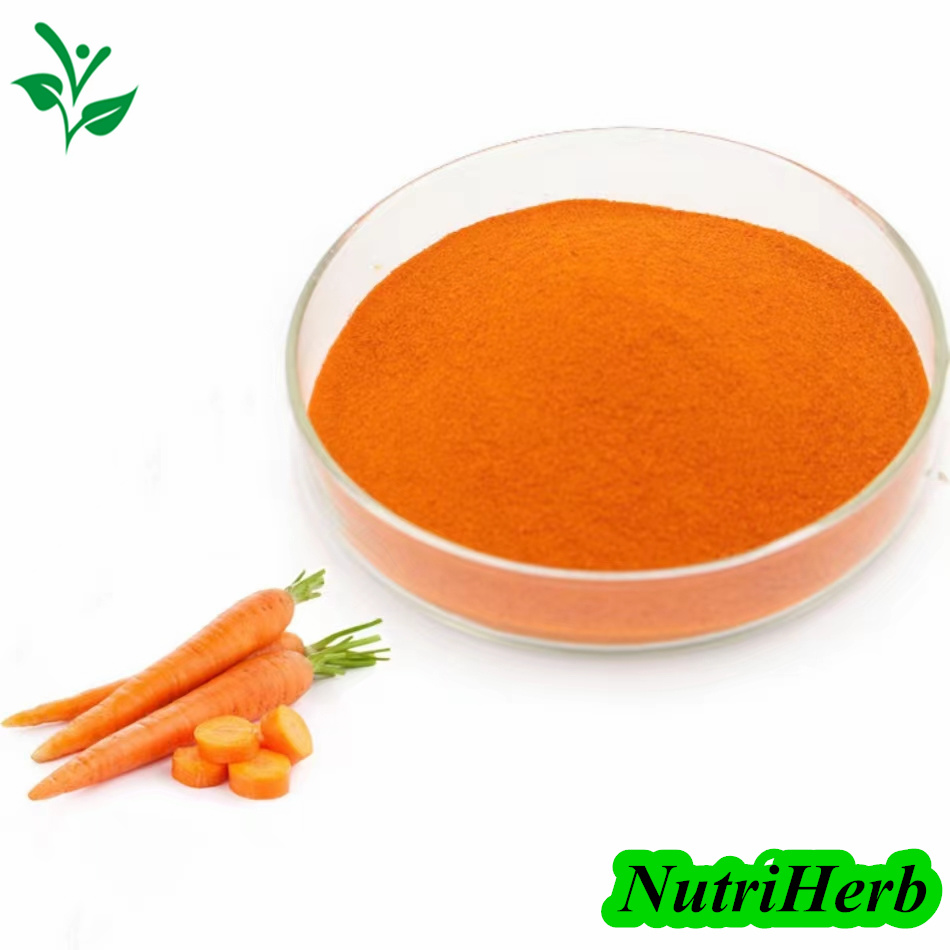
Botanical extracts serve dual purposes in product development. You can deploy them as an active nutrient or a vibrant dye. Your application framework dictates how you handle the raw material.
Food and beverage applications primarily use this material as a natural dye. You will see it in beverages, baked goods, and confectioneries. In beverage formulation, you must address the notorious "ring effect." When poorly formulated emulsions break, the fat-soluble pigment floats. This creates an unappealing orange ring around the beverage neckline. You prevent this by using high-quality emulsifiers and ensuring ideal particle size distribution. Weighting agents may also be necessary to stabilize the emulsion permanently.
Nutraceuticals and dietary supplements prioritize nutritional yield. You are standardizing dosages for provitamin A claims on your supplement fact panels. The body converts this precursor into active Vitamin A as needed. This makes it safer than preformed Vitamin A, which can cause toxicity. Compressibility considerations are vital here. Tablet pressing requires granular, free-flowing powder. Softgel suspensions require oil-based or micronized variants to prevent clumping in the encapsulation machine.
Cosmetics and personal care applications leverage unique functional benefits. You must evaluate INCI compliant extracts for topical formulations. These are used in creams, lotions, and body scrubs. The ingredient acts as a powerful botanical antioxidant. It neutralizes free radicals generated by UV exposure. Furthermore, it functions as a natural moisturizer. It helps reinforce the skin-barrier and protects against environmental damage.
Procurement teams must adopt a defensive posture when sourcing botanical extracts. The global supply chain contains vast variations in quality. Adulteration and deceptive testing methods are common risks.
Validating analytical methods is your top priority. You must insist on High-Performance Liquid Chromatography (HPLC) results. Many suppliers still use outdated UV-Vis spectrophotometry. UV-Vis measures total color intensity, which can easily be manipulated by cheaper dyes. HPLC physically separates the molecules. It guarantees you are getting accurate natural beta carotene isomers. It prevents adulteration and secures your label claims.
Carrier ingredient transparency requires strict auditing. The active pigment only makes up a fraction of the powder. The rest is the carrier. You must evaluate the allergens and origin of these carrier powders. Suppliers use corn maltodextrin, tapioca starch, or gum arabic. If your product is grain-free or hypoallergenic, a corn-based carrier ruins your positioning. Demand full disclosure of all sub-ingredients.
Supply chain resilience ensures you stay in stock. You must assess seasonal variations in crop yields. Root vegetables vary in color intensity based on rainfall and soil temperature. This impacts batch-to-batch color consistency. Ask your vendors how they blend batches to maintain uniform color standardization year-round.
When vetting new suppliers, ask these critical questions:
Do you provide batch-specific HPLC chromatograms, or only general UV-Vis results?
Can you provide stability data spanning 12 to 24 months under accelerated storage conditions?
What specific botanical or synthetic antioxidants are added to your powder to protect the pigment?
Are your carrier matrices derived from non-GMO and allergen-free sources?
To help visualize the difference in testing methods, review this comparison chart:
Feature | UV-Vis Spectrophotometry | HPLC (High-Performance Liquid Chromatography) |
|---|---|---|
Mechanism | Measures total light absorption. | Separates individual molecular isomers. |
Accuracy | Low. Prone to overestimation. | Extremely High. Pinpoints exact compounds. |
Adulteration Risk | High. Cheap dyes can mimic absorption. | Low. Identifies foreign compounds easily. |
Industry Standard | Outdated for premium claims. | The gold standard for accurate assays. |
Successful implementation of natural extracts requires rigorous technical alignment. You must match the botanical specifications with the exact thermal, pH, and shelf-life realities of your target matrix. Ignoring these physical chemistry constraints will lead to rapid color fading and degraded nutritional profiles. The shift from synthetic to natural requires patience, but it ultimately creates a higher-value, clean-label product.
Your next steps should focus on defensive procurement and physical testing. We advise formulators to request comprehensive COAs and full Safety Data Sheets (SDS) immediately. Shortlist three premium suppliers and request pilot-scale sample batches. Run preliminary stability stress tests under heat and light exposure. By testing the matrix interactions early, you protect your brand's reputation and ensure a flawless product launch.
A: Natural beta carotene is inherently fat-soluble and repels water. To make it water-soluble, manufacturers use microencapsulation. The fat-soluble pigment is wrapped inside a hydrophilic carrier matrix, like modified starch or gum arabic. This advanced processing allows the powder to disperse evenly in aqueous solutions, making it ideal for beverages.
A: It acts as a powerful antioxidant, scavenging free radicals. However, it degrades rapidly if left unprotected from light, heat, or oxygen. To maintain both product stability and color shelf life, you must use airtight, opaque packaging. Adding synergistic antioxidants, like mixed tocopherols, also drastically slows degradation.
A: Rarely. You cannot simply swap them at a 1:1 ratio. Variations in color intensity, specific isomer profiles, and the presence of carrier ingredients change how the powder behaves. You will typically require extensive reformulation, pH balancing, and dosage recalculations to match the performance of synthetic dyes.
A: HPLC (High-Performance Liquid Chromatography) is the undisputed gold standard. Unlike UV-Vis testing, which only measures total color intensity, HPLC physically separates specific carotene isomers. This precision prevents adulteration and guarantees that your formulation meets accurate, legally compliant label claims for Provitamin A content.


